
The space aimed to promote global citizenship, encourage joint learning on sustainability, and strengthen higher education’s responsibility in building sustainable futures.
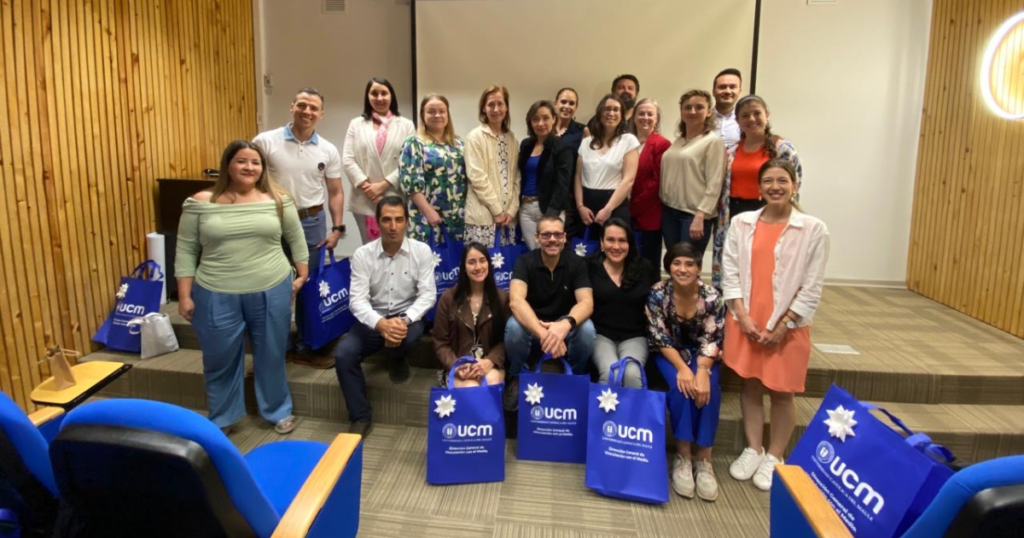
Within the framework of the 34th Annual Conference of the European Association for International Education (EAIE), various higher education institutions gathered for the session BeGlobal Café: Bridging European and Latin American Perspectives on SDGs. This space was designed to foster dialogue, learning, and co-creation around the Sustainable Development Goals (SDGs) and the role universities play in their implementation, stemming from the work carried out through the Erasmus+ Capacity Building for Higher Education project “BeGlobal.”
The interactive and collaborative meeting featured presentations by academics Natalia Timus, Director of International Learning Experience Programs and specialist in international higher education at the Université Côte d’Azur in France, and Sini Bask, senior lecturer with extensive experience in inclusive and innovative teaching at Haaga-Helia University of Applied Sciences in Finland. The session was moderated by Franco Mella, Head of Internationalization at the Catholic University of Maule. The space aimed to promote global citizenship, encourage joint learning on sustainability, and strengthen higher education’s responsibility in building sustainable futures.
An intercultural dialogue space
The methodology used was that of a World Café, which allowed participants to rotate through different thematic stations and collectively reflect on local and global challenges. This dynamic opened opportunities to exchange perspectives between the Global North and Global South, recognizing how cultural, historical, and socioeconomic contexts shape the way each community addresses sustainability challenges.
The richness of grassroots initiatives in Latin America was also highlighted, presented as concrete examples of how local communities are contributing to the SDGs. These experiences were contrasted with European practices, generating bidirectional learning and reaffirming that there is no single path to sustainable development, but rather multiple interconnected trajectories.
Workstations: from local to global
At the beginning of the session, participants engaged in an activity called Global Salad. The objective was to gauge how connected and aware participants were regarding the Sustainable Development Goals. Chairs were arranged one fewer than the total number of players. One participant would make a statement, and everyone who identified with it had to stand up and change seats. The person left standing then formulated a new statement, prompting another round of movement.
Following this integration activity, the presenters introduced the next part of the session, in which participants divided into four thematic stations:
- Local Solutions, Global Impact: analyzing community initiatives and their potential scalability to address global challenges.
- Traditional Wisdom Meets Innovation: exploring how traditional knowledge can dialogue with innovative sustainability practices.
- Education for Sustainable Development (ESD): identifying opportunities for higher education institutions to integrate the SDGs into curricula and extracurricular activities.
- Cross-Cultural Collaboration: debating power dynamics, key actors, and examples of successful intercultural collaboration.
Each group concluded with a gallery walk, sharing key points and actions that could be replicated or adapted within their own institutional contexts.
The university as an agent of change
A central focus of the session was the role of universities in shaping global citizens and connecting international education with the real implementation of the SDGs. Participating institutions agreed that internationalization can no longer be limited to academic mobility; it must evolve into a comprehensive strategy that includes university social responsibility, engagement with local communities, and the strengthening of global competencies among students and faculty.
Organizers also emphasized the relevance of innovative and playful methodologies, such as serious games, to develop skills related to global citizenship, sustainability, and intercultural collaboration. These tools enable deeper learning that transcends traditional methods and better responds to the needs of the 21st century.
Conclusions: towards active global citizenship
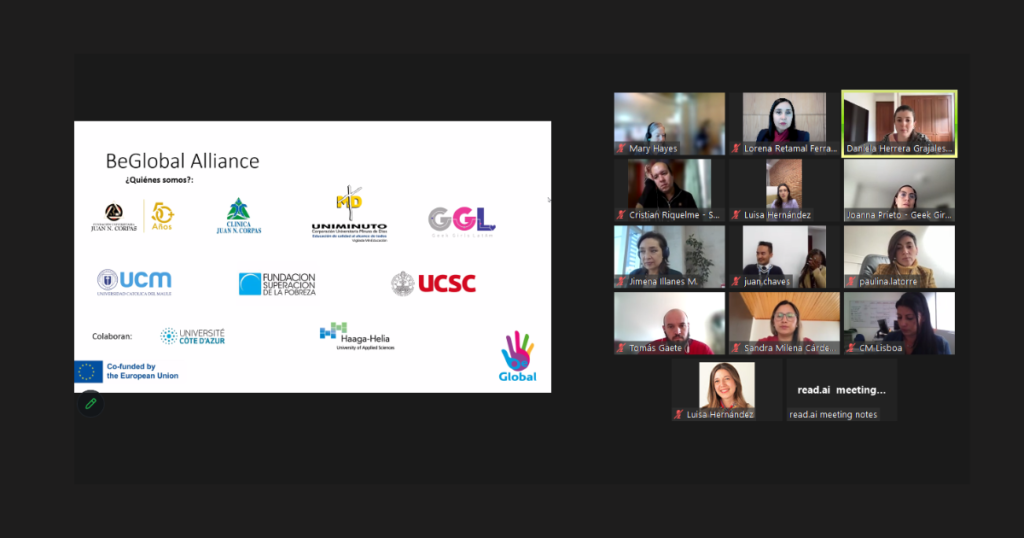
The session concluded with a call to become active global citizens, capable of thinking and acting locally with a planetary vision. From the perspective of the BeGlobal project, such encounters represent a significant contribution to social cohesion in Chile, Colombia, Finland, and France—strategic partner countries of the initiative—and to strengthening networks between Europe and Latin America. The event also allowed participants to learn about the scope of BeGlobal and to explore the use of the Global Citizenship training platform and the products expected from the ongoing serious games process led by the partner institutions.
Ultimately, the BeGlobal Café reaffirmed the importance of building bridges between regions, disciplines, and cultures to advance the 2030 Agenda. The diversity of voices and experiences not only enriched the debate but also fueled the creation of fairer, more inclusive, and more sustainable solutions.
With this gathering, the institutions of the BeGlobal Capacity Building project took another step forward in building a higher education system that, beyond training professionals, actively commits to addressing major global challenges.