
Co-creation, language, and ethics in serious games
Inclusive game design has emerged as a powerful pedagogical approach at the intersection of learning design, gamification, and serious games. Within higher education and global citizenship education, games are no longer viewed merely as motivational tools, but as value-laden learning environments that shape how learners understand the world, themselves, and others. In the BeGlobal project, inclusive game design is approached as an ethical, social, and educational process grounded in co-creation, accessibility, and epistemological justice.
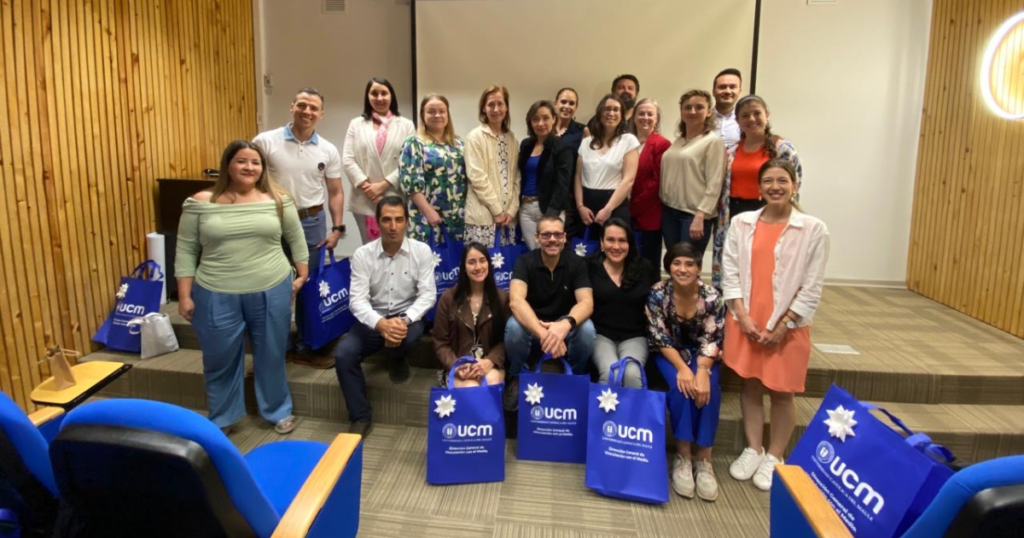
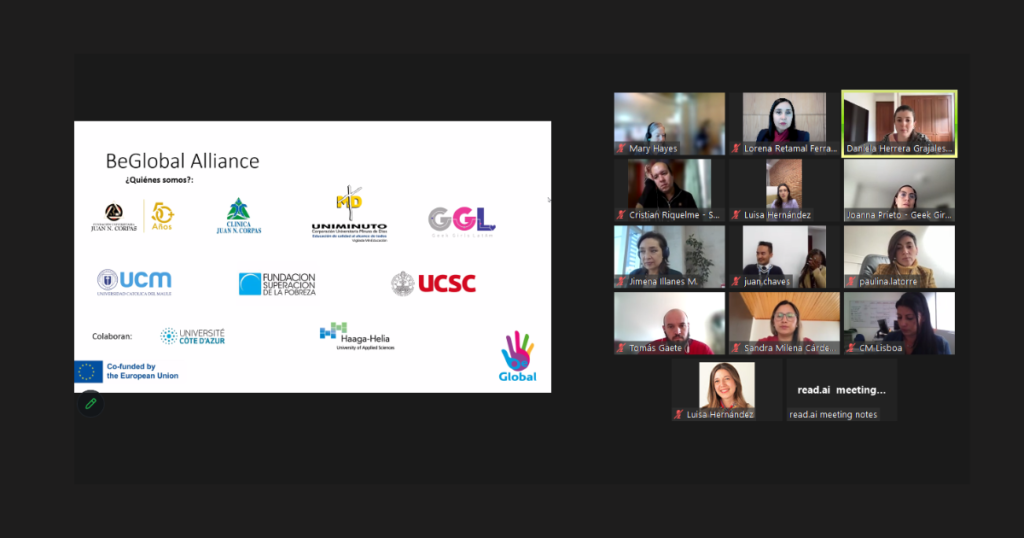
In many educational contexts, learning design still follows a top-down model where expertise flows from teachers to learners. BeGlobal intentionally challenges this paradigm by embedding co-design as a core pedagogical principle. When designing serious games for global citizenship and internationalization at home, teams composed of teachers, higher education students, and NGO representatives collaborated in facilitated virtual sessions. The process moved step by step from ideation and character building to storyboarding and platform-based implementation. At every stage, stakeholders tested and commented on the evolving games, maintaining continuous dialogue to identify barriers to participation and opportunities for greater inclusivity. Drawing on Nussbaum’s notion of real opportunity, inclusiveness was understood broadly, encompassing language, communication, diversity, multisensory design, and accessibility.
Language Is Power for Inclusion
Language plays a pivotal role in inclusive game design. As Bourdieu (1977) argues, every linguistic interaction distributes power. When serious games are designed primarily in dominant languages such as English and Spanish, choices about wording, narrative focus, and whose voices are included become deeply political. BeGlobal seeks to redistribute this power by deliberately including minoritized languages and worldviews, such as Sámi and Mapuche, whose epistemologies are embedded in everyday life.
Cognition is an embodied and multisensory process (Ferreira & Ineson, 2026). Therefore, visuals and audio in game design communicate values related to beauty, normalcy, and belonging. Inclusive language and representation determine who is visible, who has agency, and what realities are legitimized through play.
Latin American Perspectives and Epistemological Justice
From a Latin American perspective, co-creation becomes an act of linguistic and cultural justice. In Chilean contexts, integrating the Mapuche worldview into game design challenged folklorization and external expert dominance. Through continuous dialogue, game narratives were grounded in territorial identity and self-efficacy. This transformed learning spaces into intelligent environments shaped by AI and IoT (Quevedo Piratova et al., 2025), aligned with the principles of Extended Education 4.0 (Arias et al., 2025).
Ethics, Technology, and Visual Representation
Gamification and immersive technologies support self-regulated learning and socioemotional development (Sáez-Delgado et al., 2023; Sáez-Delgado et al., 2025). However, inclusive design must also consider access to devices, connectivity, and support for participation. Artificial intelligence introduces further ethical challenges, as creative tools may replicate historical biases without critical pedagogical frameworks (Barajas Motta et al., 2025; Gómez et al., 2026).
Ultimately, every design choice in a game is an ethical decision. Serious games both represent and co-create realities. While understandings of inclusivity evolve, a commitment to ethical, dialogical co-creation remains essential for educating responsible global citizens.
By: Sini Bask, Katja Danska, Fabiola Sáez.
References
Arias, J., Salas, J., Chiappe, A., & Sáez-Delgado, F. (2025). The Extended Education 4.0: Lifelong learning in times of artificial intelligence. Applied Sciences, 15(17), 9352. https://doi.org/10.3390/app15179352
Barajas Motta, N., Chiappe, A., & Sáez-Delgado, F. (2025). Bridging the gap: AI and teacher training for inclusive Education 4.0. Journal of Research in Special Educational Needs. https://doi.org/10.1111/1471-3802.70033
Bourdieu, P. (1977). The economics of linguistic exchanges. Social Science Information 16: 645.
Ferreira, J. M., & Ineson, G. (2026). Embodied learning in teacher education. Teaching and Teacher Education, 171, 105335. https://doi.org/10.1016/j.tate.2025.105335
Quevedo Piratova, D. A., Sánchez Duarte, M., Chiappe, A., & Sáez-Delgado, F. (2025). Intelligent classrooms. European Journal of Education, 60(1), e70000. https://doi.org/10.1111/ejed.70000
Sáez-Delgado, F., Parra, F., Jara-Coatt, P., Mella-Norambuena, J., & López-Angulo, Y. (2023). Effectiveness of technological interventions. Texto Livre, 12, e46636.
Sáez-Delgado, F., Coronado-Sánchez, P., et al. (2025). Use of digital technologies to support socioemotional teacher training. Education Sciences, 15(10), 1377.
Gómez, J. R., Árias Delgado, L., Chiappe, A., & Sáez-Delgado, F. (2026). Teachers’ conceptions of AI. Frontiers in Education, 11, 1778339.